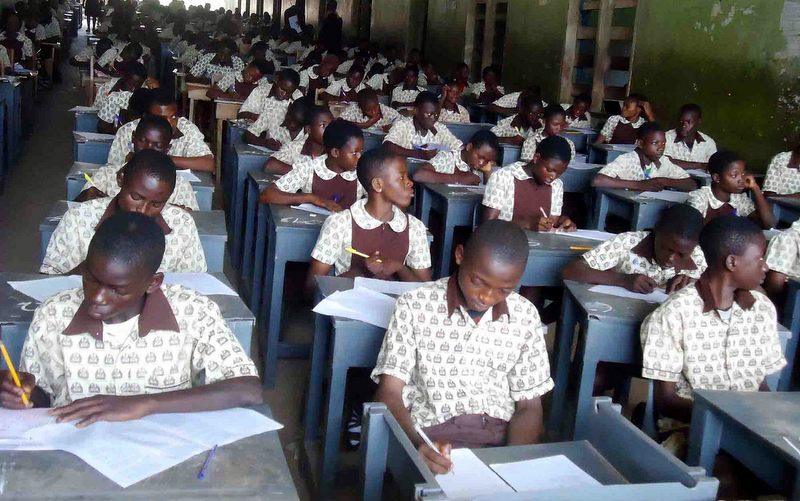
This is for BECE Candidates looking for NECO BECE 2026 Questions and Answers Pre-vocational Studies, as they call it. But this is Basic Education Certificate Examination by the National Examination Council (NECO) for JSS3 candidates. The Pre-vocational Studies paper is compulsory for all candidates regardless of their schools. So, here you will get genuine NECO BECE 2026 Questions and Answers for Pre-vocational Studies. Your duty now is to read through them as many times as possible and get ready to smash your paper. Don’t forget to join our Free Online BECE Tutorials on YouTube (Subscribe to the Channel)

Table of Contents
What are NECO BECE 2026 Questions and Answers Pre-vocational Studies?
NECO BECE 2026 Questions and Answers Pre-vocational Studies are the questions you should expect in your Pre-vocational Studies paper in 2026 BECE, together with their answers.
It is very important that every candidate preparing to sit for in the forthcoming 2026 BECE examinations should catch a glimpse of these questions.
In so doing, they will know what to expect in the exam hall. Knowing exactly what to expect will boost their confidence and guarantee them a very high score.
Note that there are two papers under Pre-vocational Studies:
- Paper 1: Agriculture
- Paper 2: Home Economics
Each of the papers has 60 multiple choice questions and would last for 1 hour.
NECO BECE 2026 Pre-vocational Studies Questions and Answers Revealed!
On this page, we shall reveal NECO BECE 2026 Questions and Answers for all candidates taking the Pre-vocational Studies paper.
How lucky you are to stumble upon this important page!
The questions are genuine and the answers are accurate, and all are a product of our passion to see you excel in your BECE and proceed to Senior Secondary School.
In the following sections, you will read the Pre-vocational Studies questions you are to expect in your 2026 NECO BECE exam as well as their answers. You can use the comments section if you still need clarification over some of the questions. We will give you a more detailed explanation.
PAPER 1: AGRICULTURE
1. Agriculture is best defined as the
A. cultivation of fibre crops on inherited farmland
B. cultivation of food crops to satisfy basic needs of man
C. processing of natural food produced for consumption
D. rearing of farm animals by poor people in rural areas
E. science of farming to satisfy human needs
2. The practice of rearing bees in wooden boxes is
A. apiculture B. aquaculture
C. heliculture D. olericulture
E. silviculture
3. An agricultural activity commonly practised in coastal areas is
A. bee rearing
B. crop farming
C. fish farming
D. nomadic farming
E. snail rearing
Use Fig 1.1 to answer questions 4 and 5.
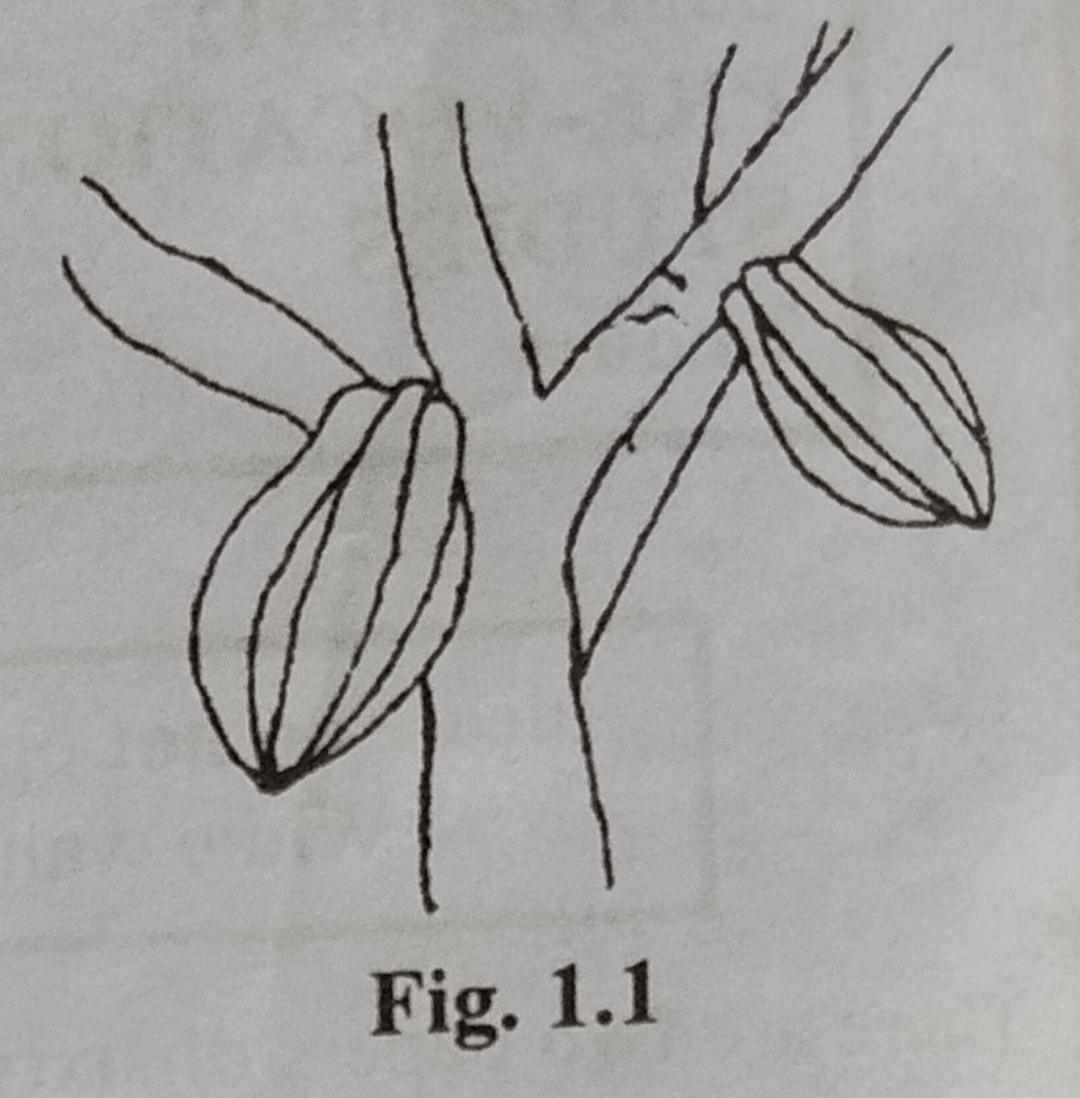
4. The crop is described as a perennial crop because it
A. possesses a long tap root
B. possesses a tall woody shoot
C. produces floral parts in groups of four
D. produces two seed leaves at germination
E. survives harsh field condition for many years
5. The fruits on the crop serve as raw material for
A. beverage industries
B. breweries
C. cigarette industries
D. ginneries
E. tanning industries
6. The following are spices except
A. carrot B. garlic
C. ginger D. onion
E. pepper
7. Bones and blood of farm animals are mainly used to manufacture
A. cloths B. feeds
C. fertilizers D. ornaments
E. vanishes
Use Fig 1.2 to answer questions 8 and 9.
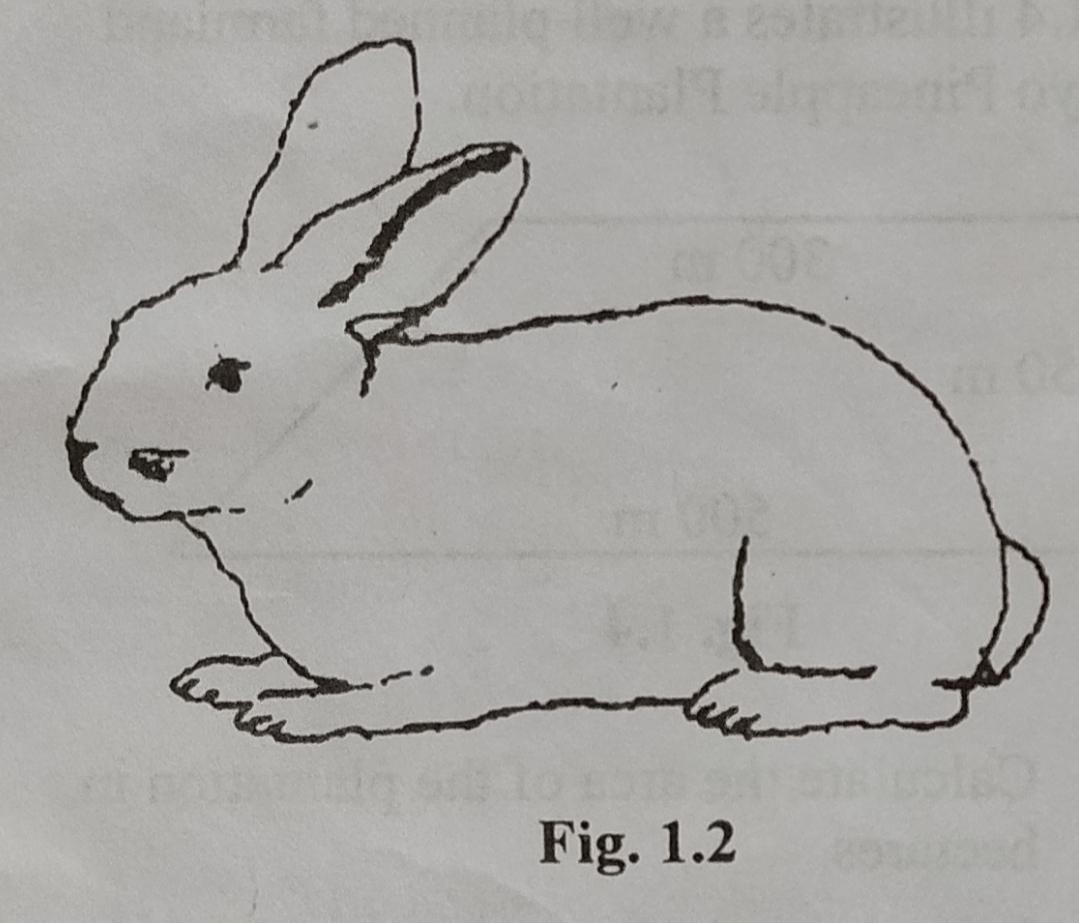
8. A by-product gotten from the animal is
A. fur B. hide
C. honey D. horn
E. milk
9. The physical feature of the animal that differentiates its females from the males is the possession of prominent
A. claws B. ears
C. furs D. teats
E. whiskers
10. Which of the following plants would be cleared from a farm by labourers as a weed?
A. Cassava B. Maize
C. Mucuna D. Okra
E. Yam
11. Post-emergence herbicides are usually applied
A. after germination
B. after harvesting
C. before site selection
D. during land preparation
E. during planting
12. Weeds are beneficial in crop farms because they
A. are alternative hosts to pests
B. are used as mulching materials
C. compete with crops for space
D. increase cost of production
E. reduce availability of soil nutrients
13. Which of the following pests causes damage to crops by injecting toxic substances into them?
A. Army worms
B. Cocoa mirids
C. Cotton stainers
D. Leaf beetles
E. Weaver birds
Use Fig 1.3 to answer questions 14 and 15.
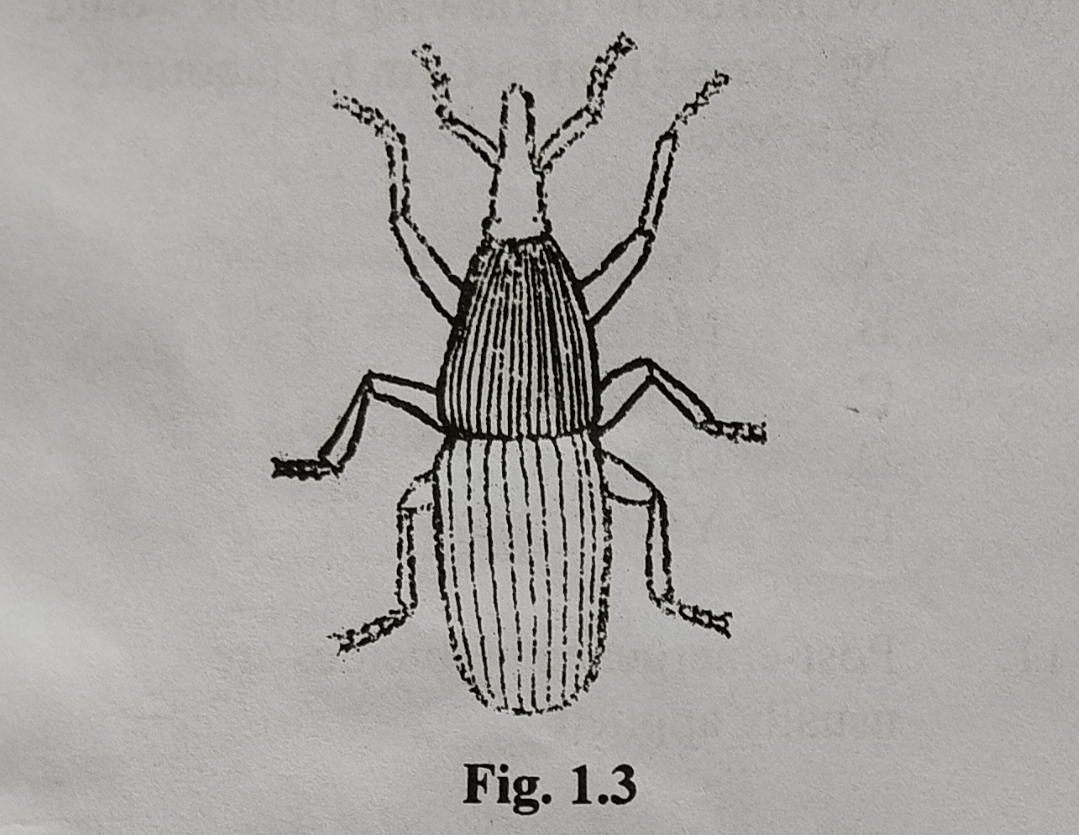
14. The insect pest is a/an
A. aphid B. beetle
C. weevil D. mirid
E. grasshopper
15. The pest can be controlled in a farm store by
A. applying insecticide
B. fumigating the surroundings
C. handpicking yearly
D. setting traps
E. shooting with catapult
16. Fixed assets used in farm production are classified as
A. capital B. interest
C. labour D. land
E. stock
17. The factor that determines the success of a production process in a farm enterprise is
A. farm input
B. fixed asset
C. labour
D. land
E. management
Fig 1.4 illustrates a well planned farmland of Tayo Pineapple Plantation
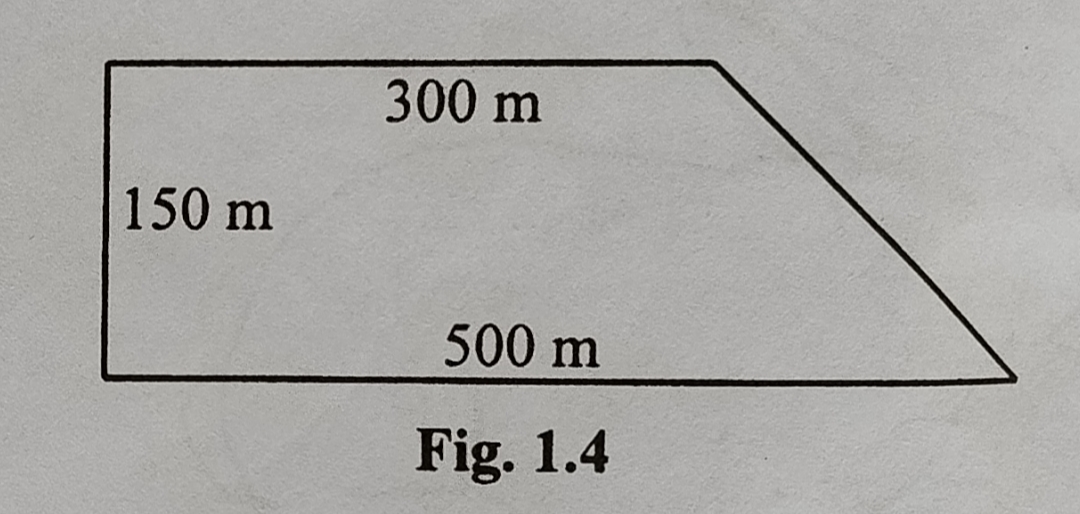
18. Calculate the area of the plantation in hectares
A. 1 B. 3
C. 6 D. 9
E. 12
Use Fig 1.5 below to answer questions 19 and 20.
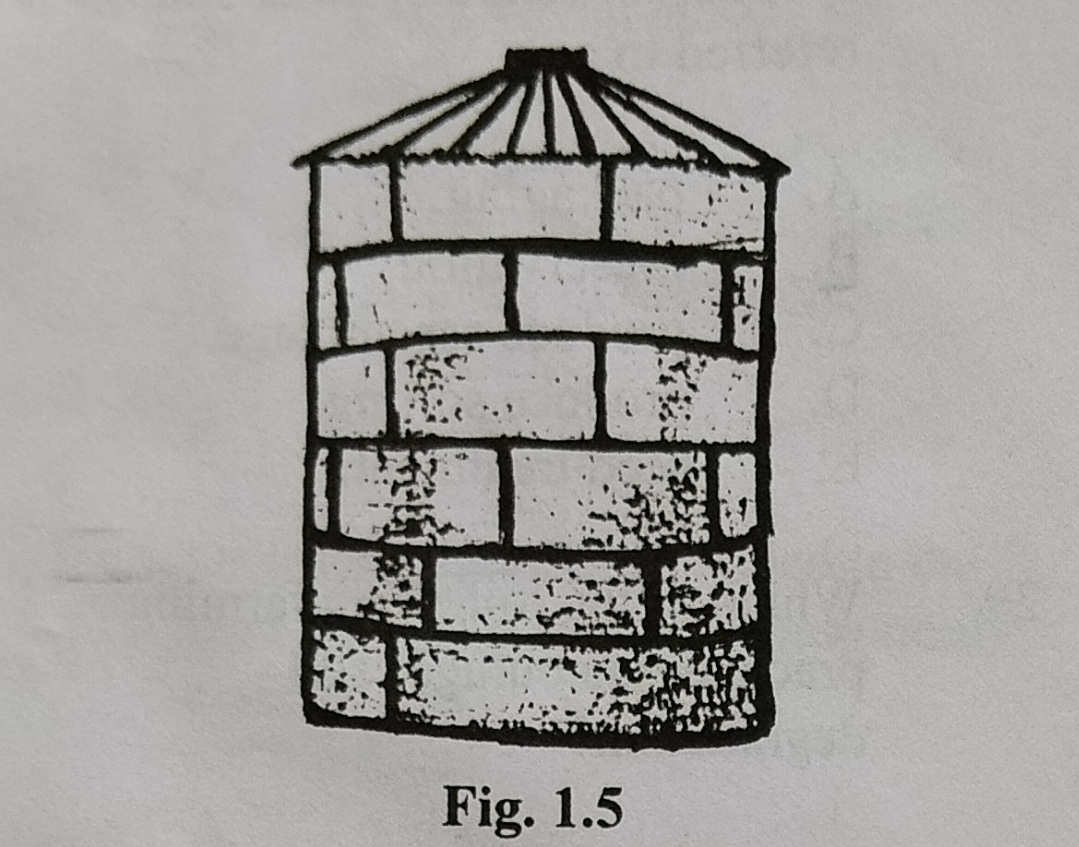
19. The farm structure is called a
A. barn B. crib
C. silo D. rhombus
E. warehouse
20. The structure is used to store
A. cotton lint B. potato.
C. vegetable D. wheat
E. yam tuber
21. The following considerations should be taken when erecting a standard poultry house except
A. constructing foot dips at the entrances
B. constructing rail guards at the four corners
C. putting wire net between walls and roofs
D. using asbestos sheets to roof the house
E. using concrete to floor the entire house
22. The major reason for partitioning animal houses into pens is to
A. allow for proper ventilation
B. avoid loss of animals
C. prevent wastage of feeds
D. protect farmers from attack
E. reduce spread of diseases
23. To ensure successful grafting of crops, a farmer should
A. cut deep into the cambium of stock and scion
B. graft a small scion to a big stock of plant
C. maintain the side shoots below the connection
D. select scion and stock from different families
E. tie a tape around the point of union
24. If a farmer planted 1,000 seeds of okra but only 750 seeds germinated What is the percentage rate of germination?
A. 15% B. 25%
C. 55% D. 75%
E. 95%
Fig 1.6 is a longitudinal section of a crop. Use it to answer questions 25 and 26.
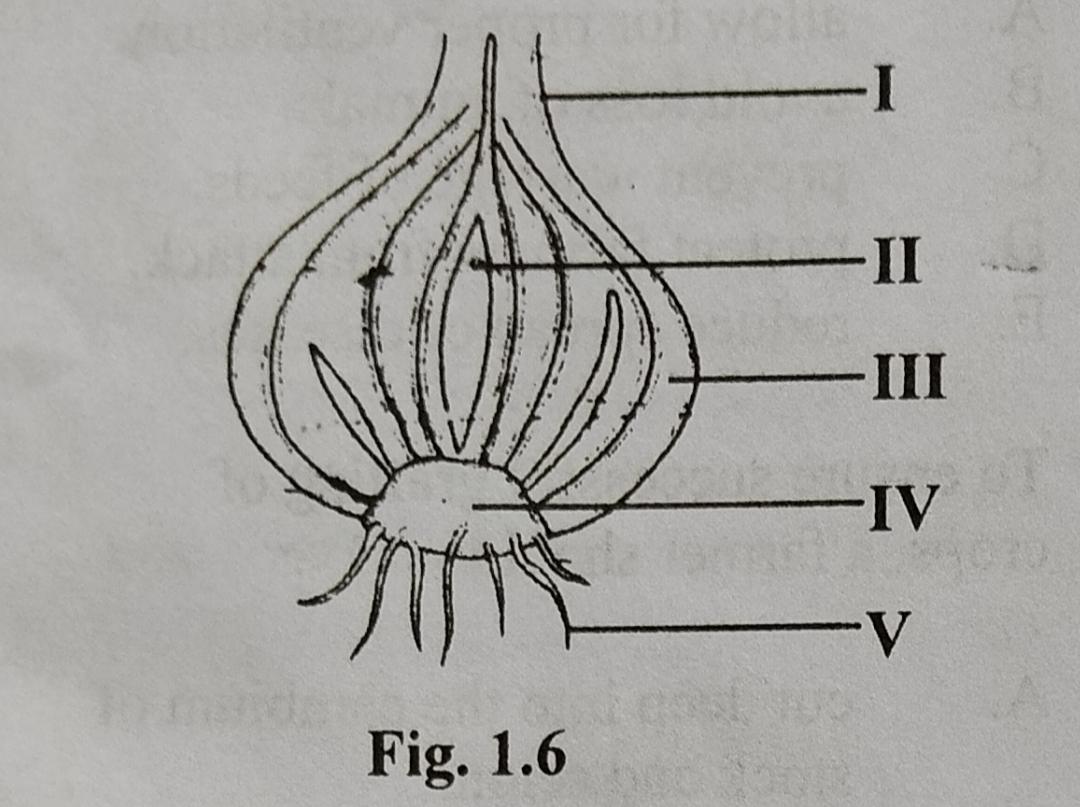
25. The crop is propagated by the use of
A. bulb B. corm
C. rhizome D. stem
E. sucker
26. A new plant comes out from the part labelled
A. I B. II C. III
D. IV E. V.
27. Which of the following farm tools can be used to carry out stumping operation?
A. Garden fork
B. Hand fork
C. Hand trowel
D. Mallet
E. Mattock
28. The farm operation carried out on harvested maize grains by a farmer in order to ensure optimal storage is referred to as
A. packaging
B. preservation
C. produce assemblage
D. produce sorting
E. seed treatment
29. Which of the following farming practices encourages soil degradation?
A. Bush burning
B. Cover cropping
C. Erosion control
D. Fertilizer application
E. Fungicide application
30. The removal of husk from rice grain during processing is called
A. hulling B. parboiling
C. polishing D. sundrying
E. winnowing
31. Which of the following is a feed additive?
A. Hay B. Salt
C. Silage D. Soilage
E. Straw
32. The advantage of serving animal feed in troughs is that it reduces
A. cannibalism among the animals
B. daily feed intake of animal
C. incidence of animal diseases
D. quantity of droppings produced
E. wastage of feed supplied
33. Drugs and antibiotics added to the feed of farm animals are commonly classified as
A. additives B. concentrates
C. roughages D. succulents
E. supplements
34. The causative organism of coccidiosis in rabbits is
A. bacteria B. fungi
C. nematode D. protozoa
E. virus
35. Red water fever in sheep is transmitted through
A. contaminated water
B. body contact
C. insect bite
D. mouldy feeds
E. wet litters
36. Scurvy in farm animals is caused by deficiency of vitamin
A. A B. C
C. D D. E
E. K
37. A parasite which uses water snail as host before infesting farm animals is
A. flea B. liverfluke
C. tick D. tapeworm
E. roundworm
38. A farmer who observed frequent sleeping, anaemia and intermittent fever in his goats should suspect the spread of
A. anthrax
B. newcastle disease
C. rinderpest disease
D. trypanosomiasis
E. tuberculosis
39. The following are control measures for mastitis in dairy farms except
A. cleaning of milking equipment
B. disinfecting milking palour
C. sanitizing farmers’ hands
D. shaving hairs around udder
E. washing the animal’s udder
40. Crayfish is an example of
A. amphibians B. crustaceans
C. mammals D. molluscs
E. reptiles
41. Which of the following types of fish are cartilaginous?
A. Catfish and stockfish
B. Carp and mudfish
C. Dogfish and shark
D. Salmon and herring
E. Tilapia and mackerel
42. Smoking of fishes is mostly practised by fish farmers because it
A. drains off oil from fishes
B. reduces the palatability of fishes
C. reduces moisture content of fishes
D. removes hard scales from fishes
E. softens hard bones in fishes
43. The forest product that serves as a raw material for tissue industries is
A. fibre B. gum
C. pulp D. rope
E. timber
44. The availability of timber in northern Nigeria is highly reduced by
A. afforestation
B. deforestation
C. regeneration
D. selective exploration
E. taungya farming
45. The following are forest regulations in Nigeria except the ban on
A. acquisition of forest licences
B. bush burning around forest
C. collection of forest firewood
D. cutting down of young trees
E. farming activities in forest reserves
Use Fig 1.7 to answer questions 46 and 47.
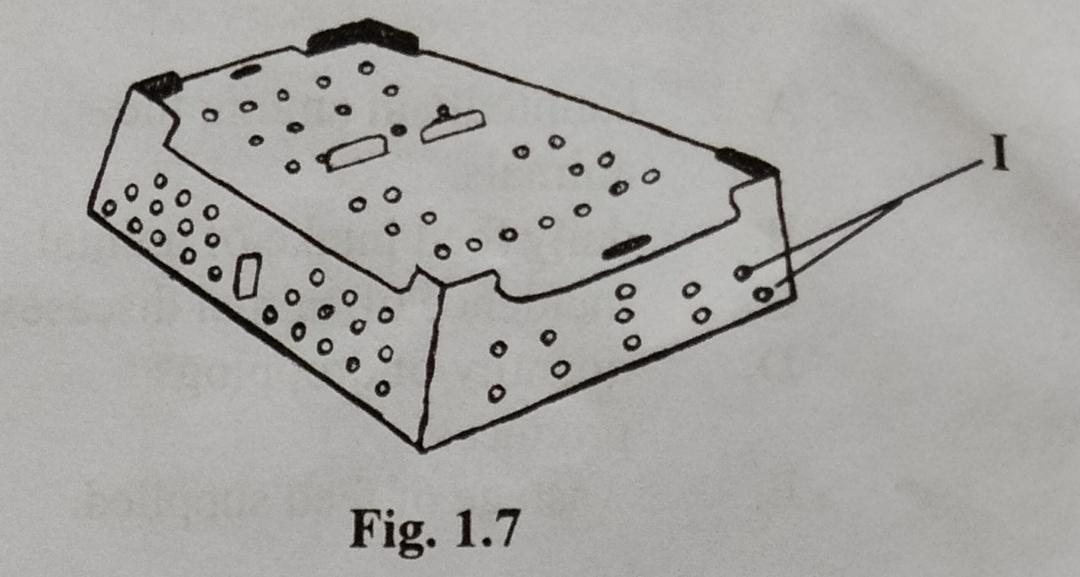
46. Which of the following live farm animals are packaged for sale using the structure?
A. Bees B. Chicks
C. Goats D. Rabbits
E. Grasscutters
47. The function of the part labelled I is for
A. feeding B. handling
C. inspection D. removal
E. ventilation
48. An important precaution that should be taken when canning farm produce for sale is that the
A. container must be painted
B. container must be sterilized
C. farmer must have correct NAFDAC number
D. produce must be frozen
E. produce must be in liquid form
Use the information below to answer questions 49 and 50.
Balogun Oil Mill planned to sell 5,000 litres of palm oil at ₦250 per litre in the mill’s warehouse.
49. Which of the following methods will be most suitable for the manager to advertise the produce to consumers?
A. Agricultural shows
B. Bill boards
C. Home visits
D. Online services
E. Telephone calls
50. If the quantity of the palm oil produced increased to 10,000 litres while other factors remain constant, what will be the outcome on the price of the oil in the warehouse? It will
A. be above the market retail price
B. be equal to market retail price
C. decrease below ₦250 per litre
D. increase above ₦250 per litre
E. remain the same ₦250 per litre
51. Farmgate price is best defined as the price at which
A. agro industries buy farm produce as raw material
B. farmers sell farm produce direct to consumers
C. government buy off excess produce in the market
D. marketing boards sell farm produce in large quantities
E. middlemen purchase farm produce directly from farmers
Use the farm record of Mamman Maize Mill shown below to answer questions 52 and 53.
| Date | Work done | Labour used | No. of days used |
| — | — | — | — |
| 15/2/23 | Clearing of 50 ha | 20 unskilled labourers | 5 days |
| 20/2/23 | Ploughing of 50 ha | 2 skilled labourers, 1 mechanised worker | 3 days |
| 23/2/23 | Ridging of 50 ha | 2 skilled labourers, 1 mechanised worker | 7 days |
| 28/2/23 | Planting of 50 ha | 10 unskilled labourers | 42 ha completed in 10 days |
52. The farm record illustrated is
A. farm budget
B. farm diary
C. input record
D. inventory record
E. production record
53. The primary aim of keeping the record in Mamman Maize Mill by the manager is to
A. calculate wages of labourers
B. determine the number of labourers used
C. keep track of daily farm activities
D. monitor work done by labourers
E. secure long term loans easily
54. A dairy farmer will benefit from the installation of computer sets for his transactions because it will
A. ease his access to sales record
B. help him keep track of his stock
C. help raise his standard of living
D. increase his hired labourers’ wages
E. lead him to install electricity in the farm
55. Sales of spent layers should be recorded on the same side as ______ in bookkeeping
A. grand totals
B. networths
C. purchases
D. receipts
E. total expenses
56. Which of the following items should be recorded on purchase invoice of a bee farmer?
A. Feed B. Honey
C. Labour D. Smoker
E. Wax
57. The function of a broker in stock exchange market is to
A. arrange foreign investors for companies
B. connect buyers and sellers representatives
C. purchase and hoard stock when demand is low
D. sell stock when there is no public offer
E. verify number of transactions yearly
58. The following are importance of agricultural stock exchange except the
A. creation of opportunities for investments
B. promotion of cooperate governance
C. raising of capital for agriculture
D. redistribution of national wealth
E. sharing of dividends to shareholders
59. Export promotion boosts agriculture by
A. attracting new investments in the oil companies
B. creating bilateral relationship between marketers
C. encouraging the immigration of youths to foreign lands
D. encouraging the purchase of products
E. increasing the income of the export crops producers
60. The major agricultural produce exported from northern Nigeria are
A. egg, cod oil, lard and fura
B. hides, crayfish, wool and honey
C. latex, coconut oil, cashew nut and garlic
D. plantain, palm oil, walnut and ginger
E. sesame, groundnut, ginger and sorghum
PAPER II: HOME ECONOMICS
1. Which of the following foods grow mould when left on the kitchen counter for a long time?
A. Biscuit B. Cake
C. Candy D. Salt
E. Sugar
2. The cosmetic represented in Fig 2.1 is used on the
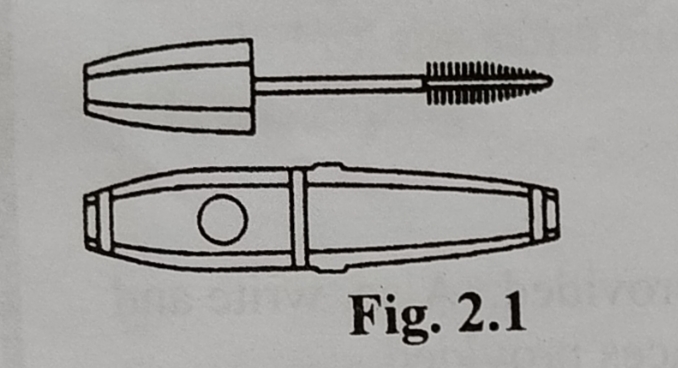
A. cheek B. eyelash
C. eyelid D. forehead
E. scalp
3. An example of primary need is
A. automobile B. exercise
C. money D. shelter
E. vacation
4. Which of the following acronyms stands for the organisation responsible for controlling the advertisement and distribution of cosmetics?
A. ICPC B. NAFDAC
C. NDLEA D. NOA
E. SON
5. The desire to buy a car in the future can be expressed as a
A. goal B. need
C. want D. standard
E. resource
6. Small amount of food eaten in-between meals is
A. breakfast B. brunch
C. dinner D. lunch
E. snack
7. Which of the following is true in pomade production?
A. Addition of wax is optional
B. All ingredient must be weighed
C. Colouring is a compulsory ingredient
D. Perfume is added first
E. Stirring is not required
8. Which of the following decorative stitches is used for neatening handkerchiefs?
A. Blanket B. Chain
C. Satin D. Laizy daisy
E. French knot
9. Which of the following beverages is essential to human existence?
A. Fruit juice B. Smoothie
C. Soft drink D. Tea
E. Water
10. What is the name of the tool represented in Fig 2.2?
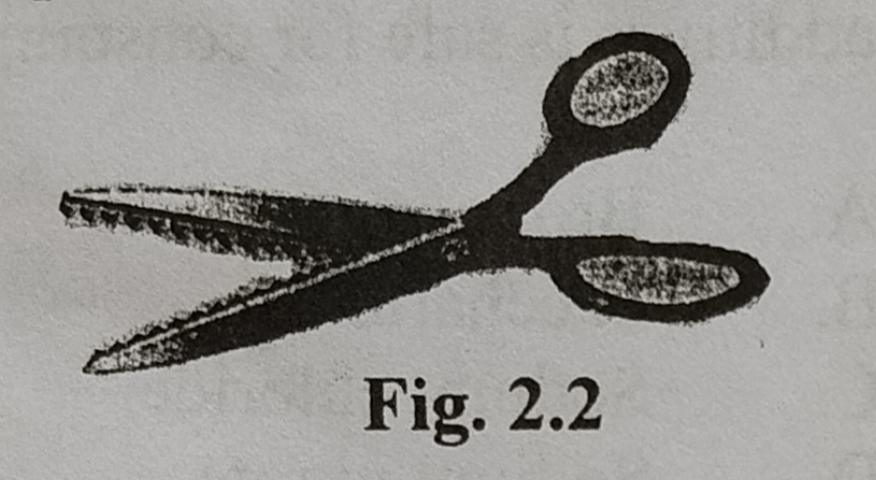
A. Embroidery scissors
B. Paper scissors
C. Pinking shears
D. Seam ripper
E. Thread snipper
11. Wash, peel, slice, oven dry and cool are steps involved in preparing ______ before packaging
A. beans
B. cashew nut
C. lettuce
D. pepper
E. unripe plantain
12. Mineral wax serves as ______ in pomade production
A. emulsifier B. moisturizer
C. purifier D. surfactant
E. thickener
13. The treatment given to food to prevent spoilage is
A. hygiene B. packaging
C. preservation D. sanitation
E. storage
14. Which of the following factors influences family decision?
A. Exercise B. Festival
C. Recreation D. Resources
E. Weather
15. Cupcakes and jollof rice differ in
A. ease of preparation
B. method of service
C. nutritional value
D. rate of digestion
E. type of meal
16. Which of the following is an example of household linen?
A. Curtain B. Gown
C. Scarf D. Shirt
E. Skirt
17. Which of the following cosmetics prevents dryness of scalp?
A. Oil B. Deodorant
C. Powder D. Foundation
E. Shampoo
18. Consumer protection act covers the following except
A. fast food
B. heavy equipment
C. imported goods
D. inherited properties
E. movable goods
19. The legal and moral duties of protection owed buyers by suppliers is termed consumer
A. choice B. education
C. right D. safety
E. satisfaction
20. Comparing values and prices of goods among different sellers is a ______ buying practice
A. safe B. hygienic
C. wise D. weekly
E. traditional
21. Which of the following is a principle of food safety?
A. Freeze all perishables
B. Pack cooked food together with raw ones
C. Precook foods before storage
D. Store all foods at room temperature
E. Use water from a clean source
22. The cost per single food commodity is ______ price
A. discount B. gross
C. net D. total
E. unit
23. Which of the following articles should be removed from clothes before storage?
A. Brooches B. Buttons
C. Cuffs D. Pads
E. Zippers
24. Which of the following food additives is safe for consumption?
A. Bromate
B. Saccharine
C. Sodium chloride
D. Sodium nitrate
E. Trans fat
25. Which of the following is an example of alkaline cleaner?
A. Borax B. Lemon
C. Water D. Vinegar
E. Turpentine
26. The following are factors that influence child development except
A. complexion
B. formal education
C. hereditary
D. healthfulness
E. parental guidance
27. Gonorrhoea infection can be contracted through
A. contaminated water
B. exercise
C. handshake
D. infected food
E. physical intimacy
28. Which of the following foods is suitable for lunch?
A. Buns
B. Chin chin
C. Coconut chips
D. Cookies
E. Yam pottage
29. Clothing repair is a process of ______ clothes
A. darning B. loosening
C. mending D. patching
E. wearing
30. Chewing food properly before swallowing is a
A. healthy eating habit
B. healthy feeding habit
C. hygienic practice
D. safety precaution
E. traditional practice
31. Mental illness can be caused by
A. addiction to illegal substance
B. drinking polluted water
C. eating too much food
D. inhaling contaminated air
E. taking prescribed medication
32. A consumer does not have the right to
A. be angry
B. be heard
C. make personal choices
D. resell goods bought
E. safe living
33. Which of the following cleaning agents acts as water softener?
A. Benzene B. Chlorine
C. Lime juice D. Vinegar
E. Washing soda
34. An example of animal fibre is
A. cotton B. linen
C. nylon D. rayon
E. wool
35. Eggs can be preserved by
A. canning B. carbonating
C. pickling D. refrigerating
E. sugaring
Use Fig 2.3 to answer questions 36 and 37.
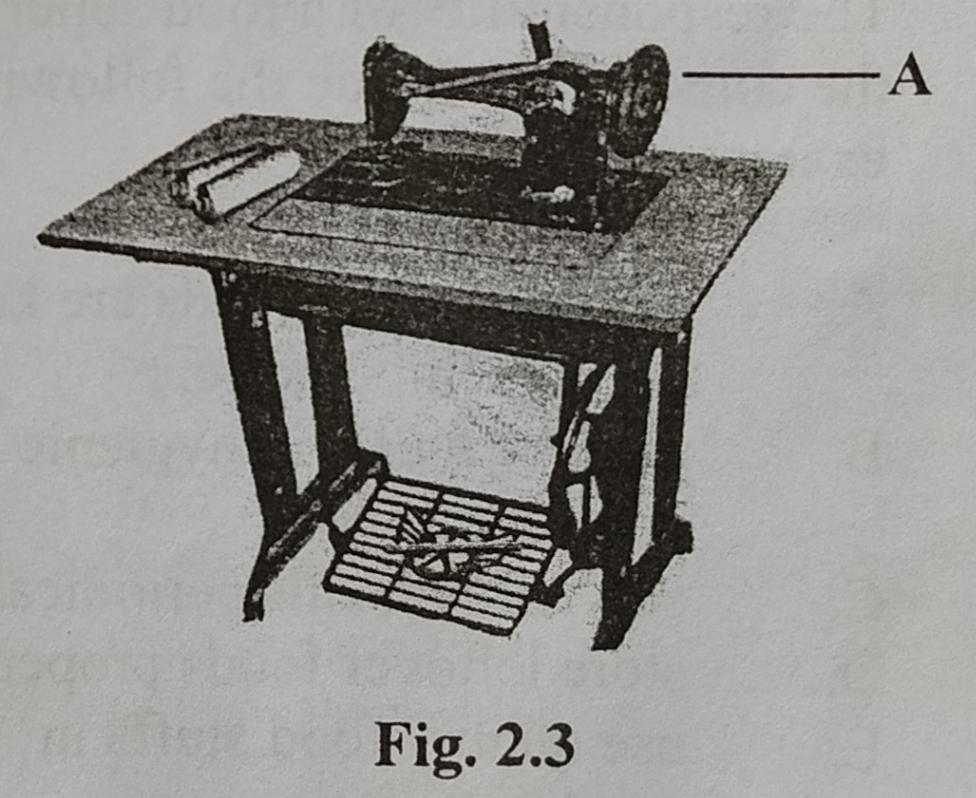
36. The diagram represents a ______ sewing machine
A. treadle B. electric
C. hand D. industrial
E. computerised
37. The part labelled A is used to
A. control the machine
B. fix the thread
C. hold the bobbin
D. move cloth forward or backward
E. regulate tightness of thread
38. Which of the following is a sign of spoilage on yam tuber?
A. Dots on the surface
B. Dry rough surface
C. Rough strands on the skin
D. Soft discoloured spots
E. Wrinkles on the skin
39. Passing out hard faeces after long intervals is a symptom of
A. constipation B. diarrhoea
C. diphtheria D. hepatitis
E. influenza
40. The responsibility of a food seller to the consumers include the following except to
A. ensure cooked foods are kept at safe temperature
B. prepare meals in hygienic environment
C. serve free meals periodically
D. store leftover foods properly
E. use quality food stuffs in meal preparation
41. Which of the following is a finger food suitable for a birthday party?
A. Beans pottage
B. Chocolate cake
C. Fried plantain
D. Jollof rice
E. Spiced beef
42. Prolonged absence of vitamin C in the diet leads to a deficiency disease called
A. goiter B. kwashiorkor
C. rickets D. marasmus
E. scurvy
43. A food safety manager should ensure compliance to hygienic regulations in order to
A. improve staff productivity
B. increase service delivery
C. prevent food poisoning
D. reduce food preparation time
E. reduce transmission of STDs
44. Grains are dried, cleaned and milled before packaging to
A. ease transportation
B. increase availability
C. increase bulk
D. increase palatability
E. prolong shelf life
45. Which of the following is a method of creating fullness on a garment?
A. Facing B. Fastening
C. Gathering D. Hemming
E. Opening
46. Which of the following body changes is likely to be seen in both boys and girls during puberty?
A. Development of breast
B. Deepening of the voice
C. Hair growth in the armpit
D. Hair growth on the chest
E. Onset of menstruation
47. The process of getting raw foodstuffs ready for cooking is termed
A. advertisement B. branding
C. consumption D. marketing
E. preparation
48. Fermentation is a food processing technique that is used to
A. break down nutrients into absorbable forms
B. convert simple sugar to alcohol
C. inactivate micro-organism
D. prepare vegetables before freezing
E. remove water from fruits
49. Silk fibres are used for making
A. blanket B. muslins
C. ropes D. towel
E. upholstery
50. Hygiene rule stipulates that
A. cooked food be stored on the kitchen shelf.
B. domesticated animals be kept in the kitchen
C. food handlers should grow long nails
D. used plates be piled up until last meal of the day
E. waste bin be provided in the cooking area
51. Which of the following is necessary for child growth?
A. Care B. Food
C. Love D. Skill
E. Toy
52. The use of substances in a way that is harmful to the individual is called drug
A. abuse B. addiction
C. control D. dependency
E. therapy
53. The fullest part of the body between the knee and the waist is
A. bust B. chest
C. hip D. thigh
E. wrist
54. Which of the following is not a water contaminant when used in the right quantity?
A. Bleach B. Chlorine
C. Dung D. Pesticides
E. Toxins
55. Craft can be described as an article made with
A. computer B. hands
C. iron D. machines
E. rubber
56. Which of the following is an effective selling strategy for street food vendors in Nigeria?
A. Make price of food affordable
B. Provide comfortable building where food can be served
C. Serve water in glass cups
D. Use china plates to dish food for customers
E. Use gold cutleries for meal service
57. The tool represented in Fig 2.4 is used for ______ needle.
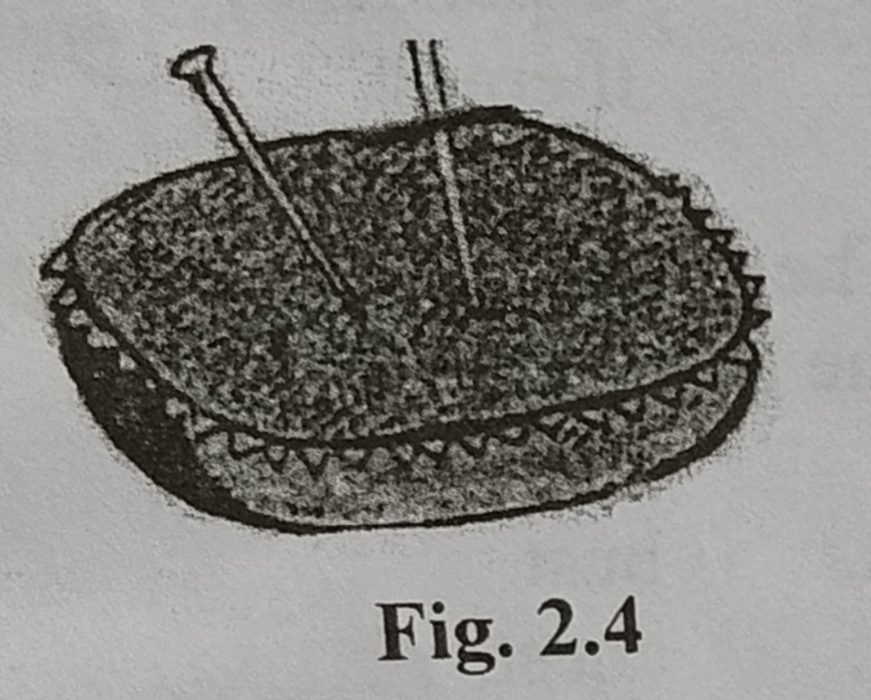
A. cleaning B. holding
C. magneting D. polishing
E. threading
58. Which of the following tips promote healthy feeding?
A. Eat food at regular intervals
B. Eat food to satisfaction
C. Eat only protein rich foods
D. Make use of food available in the house only
E. Make use of food in season
59. Salt is sprinkled on fresh fish before smoking to
A. improve the texture
B. make it crunchy
C. prevent dehydration
D. prevent spoilage
E. retain the colour
60. Exposure of canned products to intense sun rays is
A. hygienic B. profitable
C. risky D. safe
E. wise
Answers to JSS 3 NECO BECE 2026 Questions and Answers Pre-vocational Studies
Answers to BECE Pre-vocational Studies PAPER 1 (Agriculture)
The following table gives the correct answers to the objective questions in Paper 1 of JSS3 NECO BECE 2026 for Pre-vocational Studies (i.e. Agriculture). If you are using a mobile device, hold the table and scroll to the right or left for a complete view. Remember to use the comments section if you need further clarification of any question.
| Q.No | Ans | Q.No | Ans | Q.No | Ans |
|---|---|---|---|---|---|
| 1 | E | 2 | A | 3 | C |
| 4 | E | 5 | A | 6 | A |
| 7 | C | 8 | A | 9 | D |
| 10 | C | 11 | A | 12 | B |
| 13 | B | 14 | C | 15 | B |
| 16 | A | 17 | E | 18 | C |
| 19 | C | 20 | D | 21 | D |
| 22 | E | 23 | E | 24 | D |
| 25 | A | 26 | C | 27 | E |
| 28 | B | 29 | A | 30 | A |
| 31 | B | 32 | E | 33 | A |
| 34 | D | 35 | C | 36 | B |
| 37 | B | 38 | D | 39 | D |
| 40 | B | 41 | C | 42 | C |
| 43 | C | 44 | B | 45 | A |
| 46 | B | 47 | E | 48 | B |
| 49 | B | 50 | C | 51 | E |
| 52 | B | 53 | C | 54 | A |
| 55 | D | 56 | D | 57 | B |
| 58 | E | 59 | E | 60 | E |
Answers to BECE Pre-vocational Studies PAPER 2 (Home Economics)
The following table gives the correct answers to the objective questions in Paper 2 of JSS3 NECO BECE 2026 for Pre-vocational Studies (i.e. Home Economics). If you are using a mobile device, hold the table and scroll to the right or left for a complete view. Remember to use the comments section if you need further clarification of any question.
| Q.No | Ans | Q.No | Ans | Q.No | Ans |
|---|---|---|---|---|---|
| 1 | B | 2 | B | 3 | D |
| 4 | B | 5 | C | 6 | E |
| 7 | B | 8 | A | 9 | E |
| 10 | C | 11 | E | 12 | E |
| 13 | C | 14 | D | 15 | E |
| 16 | A | 17 | A | 18 | D |
| 19 | C | 20 | C | 21 | E |
| 22 | E | 23 | A | 24 | C |
| 25 | A | 26 | A | 27 | E |
| 28 | E | 29 | C | 30 | A |
| 31 | A | 32 | A | 33 | E |
| 34 | E | 35 | D | ||
| 36 | A | 37 | A | 38 | D |
| 39 | A | 40 | C | 41 | E |
| 42 | E | 43 | C | 44 | E |
| 45 | C | 46 | C | 47 | E |
| 48 | B | 49 | E | 50 | E |
| 51 | B | 52 | A | 53 | C |
| 54 | B | 55 | B | 56 | A |
| 57 | E | 58 | A | 59 | D |
| 60 | C |
Best wishes
Still Got a Question? Drop Your Question Right HERE 👇👇 and click on Search. Get an Immediate Response...
Get in touch with us
Join our FREE 2026 JAMB, WAEC, NECO and BECE Tutorial Classes here: Youtube (Subscribe to the channel)
This is for JSCE, Science and Art Students
If this post was helpful to you, please help us to reach others by sharing with the buttons below!
