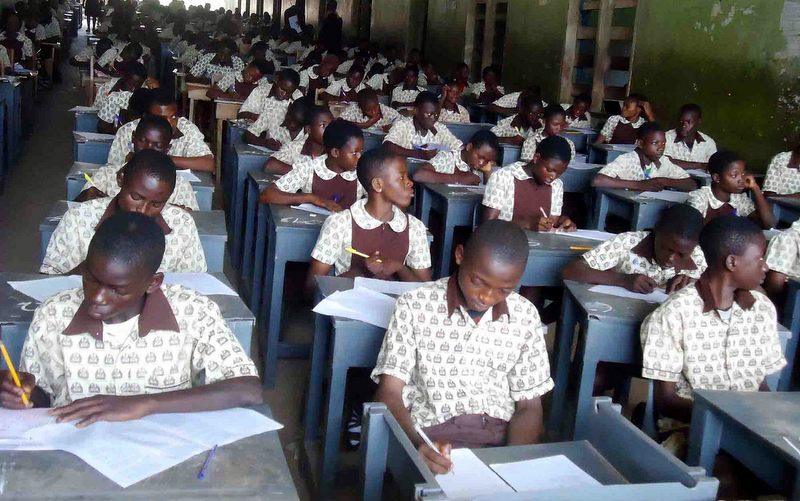
This is for BECE Candidates looking for NECO BECE 2026 Questions and Answers English Language, as they call it. But this is Basic Education Certificate Examination by the National Examination Council (NECO) for JSS3 candidates. The English Language paper is compulsory for all candidates regardless of their school. So, here you will get genuine NECO BECE 2026 Questions and Answers for English Language. Your duty now is to read through them as many times as possible and get ready to smash your paper. Remember to use the comments sections if you have questions, and don’t forget to join our Free Online Tutorial Classes on YouTube. (Subscribe to the Channel)

Table of Contents
What are NECO BECE 2026 Questions and Answers English Language?
NECO BECE 2026 Questions and Answers English Language are the questions you should expect in your English Language paper in 2026 BECE, together with their answers.
It is very important that every candidate preparing to sit for in the forthcoming 2026 BECE examinations should catch a glimpse of these questions.
In so doing, they will know what to expect in the exam hall. Knowing exactly what to expect will boost their confidence and guarantee them a very high score.
Note that the BECE English Studies paper also covers
- Spoken English
- Literature in English
- Essay
NECO BECE 2026 English Language Questions and Answers Revealed!
On this page, we shall reveal NECO BECE 2026 Questions and Answers for all candidates taking the English Language paper.
How lucky you are to stumble upon this important page!
The questions are genuine and the answers are accurate, and all are a product of our passion to see you excel in your BECE and proceed to Senior Secondary School.
In the following sections, you will read the English Language questions you are to expect in your 2026 NECO BECE exam as well as their answers. You can use the comments section if you still need clarification over some of the questions. We will give you a more detailed explanation.
PAPER I: MULTIPLE-CHOICE
SECTION A: COMPREHENSION
PASSAGE I
There are four different species of kangaroo – the red kangaroo, the eastern grey kangaroo, the western grey kangaroo and the antelope kangaroo. They are the only large animals that use hopping as their primary method of locomotion. Their large tails provide balance as they hop around quickly on two legs or walk around slowly on all four legs.
Kangaroos can jump very high, sometimes three times their own height and they can also swim. On land, they move their hind legs together, however in water, they kick each leg independently to swim. They eat grass, leaves, herbs and roots. They need little water to enable them go far distances. Kangaroos are social animals which stay in groups of at least three or four individuals. Some groups can have up to one hundred kangaroos, most of which are active at nights.
They usually have one young annually. Females have a bag in which babies live and drink milk for eight months. Kangaroos usually live about six years in the forest.
1. The passage is mainly ______ in nature.
A. argumentative
B. descriptive
C. expository
D. narrative
E. persuasive
2. Which of these is not true according to the passage?
A. All kangaroos are active at night.
B. Antelope kangaroo is a species of the kangaroo.
C. Baby kangaroos drink milk for eight months.
D. Kangaroos have large tails.
E. Most kangaroos are active at night.
3. Kangaroos are social animals because they
A. are active mostly at night.
B. are always in clusters.
C. can swim.
D. can travel far.
E. give birth to young ones yearly.
4. From the passage, it can be deduced that kangaroos are ______ animals.
A. aquatic B. carnivorous
C. domestic D. herbivorous
E. omnivorous
5. Which of the following can replace the word ‘independently’ as used in the passage?
A. Carefully B. Confidently
C. Forcefully D. Quickly
E. Separately
PASSAGE II
I was fifteen when I left home for Conakry, where I was to pursue a course in technical studies at the Ecole George-Poiret, now known as the Technical College.
I was leaving my parents for the second time. The first time was immediately after I had passed my scholarship examination, when I had acted as an interpreter to an officer who had come to map the land in our district in part of the neighbouring Sudan. But on this second occasion, I was taking a much lengthier leave of them.
For a whole week, my mother had been gathering together some provisions for me. Conakry is about 400 miles from Kouroussa, and to my mother it was an unknown, if not unexplored land, where God alone knows if I would get enough to eat. And so she collected together couscous, meat, fish, yams, rice and potatoes. The previous week, my mother had already undertaken a tour of the most celebrated marabouts, consulting them about my future and making many sacrifices. She had offered up an ox in memory of her father and had invoked the aid of her ancestors’ spirits, in order that good fortune might attend to me on a voyage which, in her eyes, was rather like departing for a savage land; the fact that Conakry is the capital of Guinea only served to accentuate the strange character of the place where I was going.
On the eve of my departure, all the marabouts and witch-doctors, friends and notables, and whoever cared to cross our threshold, all attended a magnificent feast in our compound. For my mother believed that on this occasion no one should be turned away; so that the blessing I was to take with me would be complete. Moreover, this was the reason why the marabouts had requested such large quantities of food. And so each guest, after having eaten his fill, would seize me by the hand and bless me, saying: “May good fortune favour you! May your studies be fruitful! And may the Lord protect you!”
6. According to the passage, what role did the writer play during the mapping out of the land? The writer
A. gathered information for the officer.
B. pursued a course in technical studies.
C. served as an interpreter to the officer.
D. travelled around with the officer.
E. was the messenger in the district.
7. The writer’s mother gathered food items for her son because
A. Conakry was far from Kouroussa.
B. she did not want him to eat food from Conakry.
C. she wanted to celebrate a magnificent feast.
D. she wanted to guard against the unknown.
E. there was no sufficient food in Conakry.
8. Why did the marabouts request for large quantities of food?
A. It was to enable the writer receive more blessings.
B. The guest would have more to take home.
C. The marabouts would eat to their satisfaction.
D. The writer was leaving his parents for the second time.
E. The writer’s mother wanted to make the occasion memorable.
9. It can be deduced from the passage that the writer’s mother is a
A. fortune teller.
B. marabout.
C. trader.
D. traditionalist.
E. witch-doctor.
10. What did the guests do after eating? The guests
A. gave him gifts.
B. invoked the memory of their ancestors.
C. shook the writer’s hand properly.
D. thanked the writer’s mother.
E. wished the writer well.
SECTION B: VOCABULARY DEVELOPMENT
Complete each of the following sentences with the most appropriate of the options lettered A-E (Nos. 11-25).
11. After harvesting the yams, Tunde decided to store them in a
A. barn B. hut
C. kitchen D. pantry
E. silo
12. Taiwo was taken to see a ______ when he had mental disorder.
A. dentist
B. doctor
C. paediatrician
D. psychiatrist
E. psychologist
13. As ______, Okon does not attend any religious function.
A. a hermit B. a mortal
C. a pagan D. an adherent
E. an atheist
14. The ______ landed the plane safely.
A. captain B. chauffeur
C. driver D. operator
E. sailor
15. We attended the ______ of the new king.
A. coronation
B. enthronement
C. induction
D. introduction
E. investiture
16. The robbery ______ was arraigned in court.
A. accuse B. convict
C. criminal D. squad
E. suspect
17. The ______ dismissed the case for lack of evidence.
A. advocate B. counsel
C. judge D. prosecutor
E. solicitor
18. The ______ trained his players on defence techniques.
A. captain B. coach
C. manager D. referee
E. umpire
19. Our family doctor ______ some drugs for my sick daughter.
A. diagnosed
B. dispensed
C. prescribed
D. recommended
E. selected
20. The ______ created an intercontinental recipe for our restaurant.
A. baker B. caterer
C. chef D. maid
E. steward
21. Many ______ were interviewed, but only few were employed.
A. applicants B. candidates
C. contenders D. contestants
E. employees
22. Ade plays football as
A. a career
B. a craft
C. a handiwork
D. a vocation
E. an apprentice
23. Judith was the first ______ during the debate.
A. opposer B. orator
C. presenter D. speaker
E. spectator
24. The bank gave Musa five percent ______ on his savings account.
A. dividend B. increase
C. interest D. profit
E. rate
25. The poem was arranged into four
A. chapters B. paragraphs
C. sections D. stanzas
E. units
CLOZE PASSAGE
In the passage below, the numbered gaps indicate missing words. Against each number in the list below the passage, five options are offered in columns lettered A-E. Fill each numbered gap with the most appropriate of the options (Nos. 26-35).
Corona virus belongs to a family of viruses known for containing strains that cause potentially deadly -26- in mammals and birds. In -27-, they are typically spread via -28- droplets of -29- produced by infected individuals. Corona virus can give rise to variety of -30- in different animals. While some strains cause diarrhoea, most of the time infections can be compared to a bad -31-, causing mild to moderate upper -32- problem such as a runny nose and sore throat. There are a handful of lethal exceptions which have had a devastating impact on livestock and human -33- around the -34-. The World Health Organization (WHO) has declared the virus -35-.
| S/N | A | B | C | D | E |
| 26. | complication | disabilities | diseases | disorders | pains |
| 27. | crops | flowers | humans | insects | plants |
| 28. | airborne | blood | faeces | liquid | water |
| 29. | chemical | fluid | gas | solid | waste |
| 30. | evidence | indicators | proofs | signs | symptoms |
| 31. | ache | breathe | cold | feeling | heat |
| 32. | circulatory | excretory | nervous | reproductive | respiratory |
| 33. | activities | behaviour | condition | conduct | health |
| 34. | city | communities | globe | home | neighbourhood |
| 35. | a pandemic | a plague | a scourge | an epidemic | an outbreak |
SECTION C: GRAMMATICAL ACCURACY
Complete each of the following sentences with the most appropriate of the options lettered A-E (Nos. 36-65).
36. He has met the ______ for admission into the school.
A. creteria B. criteria
C. criterria D. critteria
E. cryteria
37. She sells ______ shoes in the market.
A. children B. children’s
C. childrens’ D. childrens
E. childrens’s
38. His father gave him ______ money to buy provisions.
A. a few B. a lot
C. few D. many
E. much
39. John is the ______ boy in his class.
A. more smartest
B. most smartest
C. smart
D. smarter
E. smartest
40. He ______ his father’s car every Saturday.
A. has washed
B. is washing
C. wash
D. washed
E. washes
41. The price of the item ______ increased.
A. are B. has
C. have D. is
E. were
42. Which of the following words can be used with the suffix ‘-ness’ to form a new word?
A. Care B. Clean
C. God D. Red
E. Sleep
43. Ade was kind to all the guests, ______ he?
A. is B. isn’t
C. was D. wasn’t
E. will
44. The pupils shared the cake among
A. ourselves B. theirselves
C. themselves D. yourself
E. yourselves
45. The river is ______ deep for the little boy to cross.
A. much B. so
C. such D. too
E. very
46. She studied very hard ______ failed the examinations.
A. and B. although
C. but D. however
E. so
47. He ______ swim very well when he was young.
A. can B. could
C. might D. should
E. would
48. His parents got a fine ______ for him.
A. accommodation
B. acommodation
C. accomodation
D. acomondation
E. accommodasion
49. She ______ her children for destroying the flowers.
A. has being scolding
B. have scolded
C. scold
D. scolded
E. scolds
50. Direct Speech: “The time now is nine o’clock,” he said.
Indirect Speech: He said that the time ______ nine o’clock.
A. now is B. now was
C. then is D. then was
E. was
51. I do not have ______ book in my bag, Mary said.
A. a lot of B. any
C. many D. much
E. some
52. We saw three ______ dogs.
A. alsatian fierce looking
B. fierce alsatian looking
C. fierce looking alsatian
D. looking alsatian fierce
E. looking fierce alsatian
53. Neither Jack nor his siblings ______ present at their parents’ wedding anniversary.
A. are B. is
C. was D. were
E. were being
54. Each of the students ______ a desk and a chair.
A. are having
B. has
C. have
D. is having
E. were having
55. Active voice: I watched an interesting movie last night.
Passive voice: An interesting movie ______ by me last night.
A. are watch
B. is watched
C. was being watched
D. was watch
E. was watched
56. Active voice: Mary is decorating the rooms.
Passive voice: The rooms ______ decorated by Mary.
A. are being B. is being
C. was being D. was
E. were being
57. Direct Speech: “They have gone home,” John said.
Indirect Speech: John said that they ______ home.
A. are going
B. had gone
C. has gone
D. have gone
E. were going
58. We need a ______ of sand to fill the gully.
A. clump B. collection
C. group D. heap
E. pack
59. The baby’s hair was ______ packed with ribbons.
A. roughly B. calmly
C. joyfully D. quietly
E. beautifully
60. Which of the following prefixes can be used with the word ‘force’ to form a new word?
A. en- B. il-
C. in- D. mis-
E. re-
61. He woke up very early ______ still missed the first bus.
A. and B. but
C. even D. though
E. yet
62. We ______ not be late to school if we don’t want to be punished.
A. can B. may
C. must D. shall
E. would
63. The boy wanted to know ______ his brother did the work.
A. and B. as
C. how D. which
E. while
64. We travel to the village every December ______ bus.
A. by B. in
C. on D. through
E. with
65. John and Bayo blamed ______ for the error.
A. each other
B. one another
C. theirselves
D. themself
E. themselves
SECTION D: SPOKEN ENGLISH
Choose from the options lettered A-E the one that contains the given phonetic symbol (Nos. 66-80).
66. / ʃ / (A. ache, B. beach, C. chop, D. pleasure, E. wash)
67. / ei / (A. bear, B. fuel, C. heir, D. kite, E. straight)
68. / θ / (A. both, B. bottle, C. clothes, D. father, E. tongue)
69. / ɒ / (A. bulk, B. cock, C. come, D. goal, E. worm)
70. / u / (A. cool, B. grew, C. look, D. roof, E. soup)
71. / i: / (A. bread, B. free, C. inch, D. lift, E. ship)
72. / ŋ / (A. final, B. join, C. knew, D. sign, E. tank)
73. / ʌ / (A. lawn, B. picture, C. rule, D. touch, E. turn)
74. / f / (A. laugh, B. leopard, C. shepherd, D. shiver, E. wave)
75. / eə / (A. dear, B. fair, C. jewel, D. name, E. spear)
76. / ð / (A. donkey, B. mouth, C. other, D. teeth, E. three)
77. / æ / (A. above, B. bark, C. market, D. meat, E. rat)
78. / u: / (A. book, B. pull, C. push, D. root, E. should)
79. / ɔ: / (A. clock, B. fall, C. gone, D. toy, E. watch)
80. / ɜ: / (A. alone, B. better, C. doctor, D. science, E. worse)
PAPER II
SECTION A: DRAMA
Maxwell Okwor Onyekachi: Vengeance of the Spirit
1. The snake that bites Okoro is on a ______ mission.
A. combat
B. peaceful
C. reconciliatory
D. suicide
E. vengeance
2. Ngozi does not want to marry Obiekwe because
A. he proposes late.
B. her parents want to trade her off.
C. she is still young.
D. she loves Okpoko.
E. she wants to complete her education.
3. Who suggests elopement in the play?
A. Amaka B. Chioma
C. Orji-Ugo D. Ngozi
E. Okpoko
4. Ngozi dies as a result of being
A. beaten by her husband
B. kicked in the chest
C. macheted
D. over pampered
E. pushed to the ground
5. “My parents are trying to ruin my happiness….” The happiness being referred to is
A. business B. education
C. friendship D. health
E. marriage
’Tade Adegbindin: The Saint
6. The politician takes the soldier to Baba Agba for
A. first aid
B. initiation rites
C. malaria treatment
D. spiritual immunity
E. spiritual refuge
7. Who considers his father a pagan?
A. Ajala B. Aremu
C. Atiba D. Ladepo
E. Yele
8. Who always love to be like Baba Agba?
A. Ajala B. Ajihun
C. Aremu D. Atiba
E. Mope
9. Ladepo wants his son to be a Minister of
A. Sports B. God
C. Ifa D. Labour
E. Education
10. Aremu apologises to ______ for all he has done.
A. Adetoun B. Atiba
C. Baba Agba D. Ladepo
E. Yele
Tina Bogwu: The Rejected Child
11. Kola and Ada meets at the University of ______ cafeteria.
A. Birmingham
B. California
C. Chicago
D. Lagos
E. Massachusetts
12. Kola weds Ada at a court registry in
A. Birmingham
B. Lagos
C. Liverpool
D. Massachusetts
E. Washington
13. Omolasho’s parents are
A. doctors B. engineers
C. farmers D. teachers
E. traders
14. Kilani dies of
A. car accident
B. dog bite
C. food poisoning
D. scorpion’s sting
E. snake bite
15. Omolasho is the only offspring of
A. Baba Ojo
B. Kilani and Kashimawo
C. Engr. Kola and Dr. (Mrs.) Ada Omowunmi
D. Engr. Sule and Dr. (Mrs.) Ranti Omowunmi
E. Mr. and Mrs. Okafor
SECTION B: PROSE
Chigbo Ugwuoke: Ogadimma: The Diary of a Housemaid
16. Ogadimma: The Diary of a Housemaid is a/an
A. prose B. drama
C. essay D. poetry
E. autobiography
17. The city Ogadi is taken to is
A. Abuja B. Asaba
C. Benin D. Lagos
E. Port Harcourt
18. The greatest problem Mabel has in her matrimonial home is
A. cracking wall
B. frequent fighting
C. intruding frogs
D. leaking roof
E. Ude’s drunkenness
19. Who prepares to write WASSCE?
A. Mabel B. Ngozi
C. Nkem D. Ogadi
E. Yinka
20. Ogadi runs from Mabel’s house because she
A. commits an offence
B. does not want to be connected to her
C. is afraid of the police
D. is hungry
E. likes street life
Chinelo Ifezulike: The Costly Mistake
21. Udoh graduates as a/an
A. Engineer
B. Lawyer
C. Medical doctor
D. Nurse
E. Teacher
22. Uchenna warns Daniel to desist from
A. greed B. malpractice
C. lying D. robbery
E. nefarious acts
23. Daniel could not finish his examination because of
A. distraction
B. misconduct
C. love affairs
D. poor performance
E. unseriousness
24. Stephen comes from a/an ______ family.
A. dubious B. educated
C. illiterate D. poor
E. wealthy
25. Much later in life, Daniel becomes a
A. bus conductor
B. bus driver
C. gateman
D. tricycle driver
E. thief
Nicole Chinelo: Save the African Womb
26. Agnes has ______ miscarriages in a row.
A. two B. three
C. four D. six
E. eight
27. “There is no need crying over spilt milk” exemplifies the use of
A. idiom B. metaphor
C. irony D. euphemism
E. metonymy
28. Dr. Eni is a native of
A. Abriba B. Awka
C. Borokri D. Nembe
E. Nsukka
29. Agnes is born and bred in
A. Asaba B. Ilesha
C. Kaduna D. Ughelli
E. Yenagoa
30. Madam Dali is excommunicated from the women’s group because her daughter
A. does not pay the group’s dues
B. fails her final examinations
C. gets pregnant before marriage
D. refuses to attend group meetings
E. wears trousers
SECTION C: POETRY
31. The expression, ‘NEPA, Oh! NEPA’ Some say you rhyme with ‘leper’ as used in Niyi Osundare’s “NEPA” is an example of
A. irony
B. metaphor
C. paradox
D. personification
E. simile
32. The subject matter of Niyi Osundare’s “INÚ RERE” is
A. cowardice
B. faithfulness
C. good conduct
D. good conscience
E. meekness
33. Chigbo Ugwuoke’s “Some African Democrats” is written in ______ stanza of ______ lines.
A. one, nineteen
B. one, twenty five
C. three, fifteen
D. two, nineteen
E. two, twenty five
34. The main theme in Segun Adekoya Mabogaje’s “Change! Change!! Change!!! is
A. bad governance
B. banditry
C. change
D. corruption
E. violence
35. The mood in “Some African Democrats” by Chigbo Ugwuoke is that of
A. agitation B. anger
C. doubt D. happiness
E. sorrow
36. The expression, ‘Night is nippy’ in Oiwona Andrew’s “Nightfall” is an example of
A. euphemism B. hyperbole
C. metaphor D. pun
E. personification
37. Akeem Ajibade’s “Let my Mother Sing” celebrates
A. peace B. failure
C. loss D. diligence
E. struggles.
38. The mood in Akeem Ajibade’s “Let My Mother Sing” is that of
A. confusion B. sadness
C. happiness D. nervousness
E. disappointment
39. The expression, ‘Night is diabolic’ in Oiwona Andrew’s “Nightfall” means that ‘night’ is
A. cruel B. gracious
C. wicked D. promising.
E. melancholic
40. E. E. Sanyaolu’s “Unsteady Commissioner” is written in ______ stanzas.
A. two B. three
C. four D. five
E. six
PAPER III: ESSAY
Answer both questions 1 and 2. Your answer to each question should not be less than 200 words. You are free to use the hints below each question and/or any other ones you like.
Each question carries fifteen(15) marks.
1. Write a letter to your uncle abroad, narrating the effects of the lockdown during the Covid-19 pandemic in your country.
Hints:
(i) Address.
(ii) Mention the effects of the lockdown in your country.
(iii) Conclusion.
2. Write a composition on the topic: My Visit to the Zoo.
Hints:
(i) The name of the zoo.
(ii) The town in which it is located.
(iii) Name and describe the animals you saw there.
(iv) Conclusion.
Answers to JSS 3 NECO BECE 2026 Questions and Answers English Language
Answers to PAPER I
The following table gives the correct answers to the objective questions in Paper I of JSS3 NECO BECE 2026. If you are using a mobile device, hold the table and scroll to the right or left for a complete view.
| Q.No | Ans | Q.No | Ans | Q.No | Ans |
|---|---|---|---|---|---|
| 1 | B | 2 | A | 3 | B |
| 4 | D | 5 | E | 6 | C |
| 7 | D | 8 | A | 9 | D |
| 10 | E | 11 | A | 12 | D |
| 13 | E | 14 | A | 15 | A |
| 16 | E | 17 | C | 18 | B |
| 19 | C | 20 | C | 21 | A |
| 22 | A | 23 | D | 24 | C |
| 25 | D | 26 | C | 27 | C |
| 28 | A | 29 | B | 30 | E |
| 31 | C | 32 | E | 33 | E |
| 34 | C | 35 | A | 36 | B |
| 37 | B | 38 | E | 39 | E |
| 40 | E | 41 | B | 42 | B |
| 43 | D | 44 | C | 45 | D |
| 46 | C | 47 | B | 48 | A |
| 49 | D | 50 | D | 51 | B |
| 52 | C | 53 | D | 54 | B |
| 55 | E | 56 | A | 57 | B |
| 58 | D | 59 | E | 60 | A |
| 61 | E | 62 | C | 63 | C |
| 64 | A | 65 | A | 66 | E |
| 67 | E | 68 | A | 69 | B |
| 70 | C | 71 | B | 72 | E |
| 73 | D | 74 | A | 75 | B |
| 76 | C | 77 | E | 78 | D |
| 79 | B | 80 | E |
Answers to PAPER II
The following table gives the correct answers to the objective questions in Paper II of JSS3 NECO BECE 2026. If you are using a mobile device, hold the table and scroll to the right or left for a complete view.
| Q.No | Ans | Q.No | Ans | Q.No | Ans |
|---|---|---|---|---|---|
| 1 | E | 2 | D | 3 | E |
| 4 | B | 5 | E | 6 | D |
| 7 | D | 8 | C | 9 | B |
| 10 | C | 11 | E | 12 | D |
| 13 | D | 14 | E | 15 | C |
| 16 | A | 17 | D | 18 | E |
| 19 | A | 20 | B | 21 | B |
| 22 | B | 23 | B | 24 | B |
| 25 | D | 26 | B | 27 | A |
| 28 | D | 29 | E | 30 | C |
| 31 | E | 32 | D | 33 | A |
| 34 | C | 35 | A | 36 | E |
| 37 | E | 38 | C | 39 | C |
| 40 | B |
Answers to PAPER III
1. Letter to My Uncle Abroad on the Effects of the COVID-19 Lockdown
No. 15 Unity Street,
Off Market Road,
Ibadan,
Oyo State,
Nigeria.
15th August, 2025.
Dear Uncle James,
I hope this letter meets you in good health and high spirits. I am very happy to write to you again. I wish to tell you about the effects of the lockdown during the COVID-19 pandemic in our country.
The lockdown affected almost every aspect of life. Schools were closed for several months, and students were forced to stay at home. Many of us could not continue our studies properly because online learning was not easy. Some students did not have phones, laptops, or internet access. As a result, learning became difficult and slow.
Businesses were also badly affected. Many people who depended on daily income could not go out to work. Markets were shut down, offices were closed, and transport was restricted. This caused serious hardship for families. Some people lost their jobs, while others struggled to feed their families.
The lockdown also affected social and religious activities. Churches, mosques, weddings, and burials were suspended. People were advised to stay indoors and avoid gatherings. Although these measures were meant to protect lives, they made many people feel lonely and worried.
On the positive side, the lockdown helped to reduce the spread of the virus. It also taught people the importance of hygiene, such as washing hands regularly and maintaining cleanliness.
Uncle, the lockdown was a very challenging period for everyone, but we thank God that things are better now. I hope to hear from you soon.
Yours lovingly,
Henry
2. Composition: My Visit to the Zoo
My visit to the zoo was one of the most exciting experiences of my life. I visited the zoo during the last school holiday with my parents and younger sister. We left home very early in the morning because we were eager to see different animals.
When we arrived at the zoo, we were welcomed by a cool breeze and a beautiful environment. The zoo was neat, well-organized, and full of visitors. The first animals we saw were monkeys. They were jumping from one tree to another and entertaining people with their funny actions.
We also saw lions, tigers, elephants, and camels. The lions looked fierce, but they were kept in strong cages. The elephants were very large, and I was surprised by their long trunks. The zookeeper explained how the animals were fed and cared for daily.
One animal that caught my attention was the snake. It was long and quiet inside a glass cage. I felt a little afraid, but I was also curious. We later visited the bird section, where we saw parrots, peacocks, and eagles. Their colourful feathers were very beautiful.
Before leaving, we took photographs and bought snacks. I learned many things about animals and nature during the visit. My visit to the zoo was both educational and enjoyable, and I will always remember it.
Still Got a Question? Drop Your Question Right HERE 👇👇 and click on Search. Get an Immediate Response...
Get in touch with us
Join our FREE 2026 JAMB, WAEC, NECO and BECE Tutorial Classes here: Youtube (Subscribe to the channel)
This is for JSCE, Science and Art Students
If this post was helpful to you, please help us to reach others by sharing with the buttons below!
