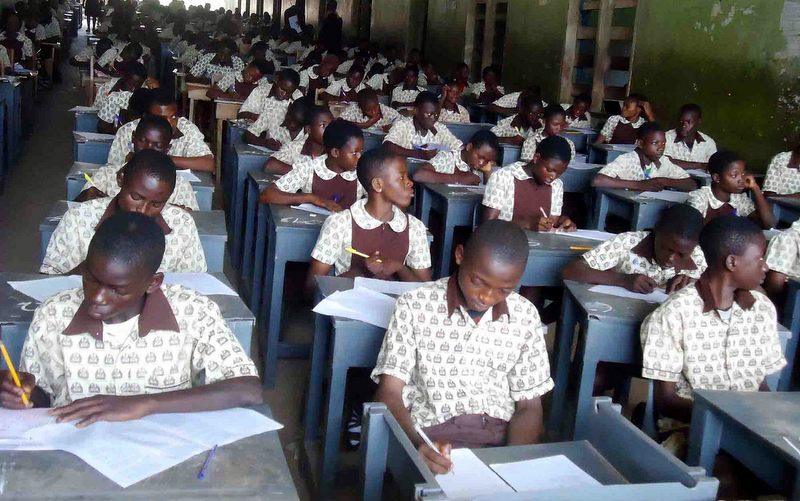
This is for BECE Candidates looking for NECO BECE 2026 Questions and Answers CCA (Cultural and Creative Arts), as they call it. But this is Basic Education Certificate Examination by the National Examination Council (NECO) for JSS3 candidates. The Cultural and Creative Arts paper is compulsory for all candidates regardless of their schools. So, here you will get genuine NECO BECE 2026 Questions and Answers for CCA. Your duty now is to read through them as many times as possible and get ready to smash your paper. Remember to use the comments sections if you have questions, and don’t forget to join our Free Online Tutorial Classes on YouTube. (Subscribe to the Channel)

Table of Contents
What are NECO BECE 2026 Questions and Answers CCA?
NECO BECE 2026 Questions and Answers CCA are the questions you should expect in your CCA paper in 2026 BECE, together with their answers.
It is very important that every candidate preparing to sit for in the forthcoming 2026 BECE examinations should catch a glimpse of these questions.
In so doing, they will know what to expect in the exam hall. Knowing exactly what to expect will boost their confidence and guarantee them a very high score.
Note that there are two papers under CCA:
- Paper 1: Art and Craft
- Paper 2: Music, Drama and Dance
Each of the papers has 60 multiple choice questions and would last for 1 hour.
NECO BECE 2026 CCA Questions and Answers Revealed!
On this page, we shall reveal NECO BECE 2026 Questions and Answers for all candidates taking the CCA paper.
How lucky you are to stumble upon this important page!
The questions are genuine and the answers are accurate, and all are a product of our passion to see you excel in your BECE and proceed to Senior Secondary School.
In the following sections, you will read the CCA questions you are to expect in your 2026 NECO BECE exam as well as their answers. You can use the comments section if you still need clarification over some of the questions. We will give you a more detailed explanation.
PAPER I: ART AND CRAFT
1. Feather is an alternative to
A. brush B. pen
C. pencil D. ruler
E. spatula
2. Which of the following is a primary colour?
A. Blue B. Brown
C. Green D. Orange
E. Purple
3. The following are informal Art Schools except
A. Art gallery at Oyo
B. Catholic workshops at Oye-Ekiti
C. Mbari Mbayo at Osogbo
D. Pottery workshops at Abuja
E. Ulli movement at Nsukka
4. Bruce Onabrakpeya specialized in
A. ceramics and graphics
B. graphics
C. painting and print making
D. sculpture
E. wood carving
5. Reflection of light on a surface is known as
A. colour B. shape
C. space D. tone
E. value
6. Colours that are closely related are referred to as
A. harmonious B. intermediate
C. primary D. secondary
E. tertiary
7. Which of the following can be used to increase the brightness of a colour?
A. Black B. Brown
C. Green D. Red
E. White
8. The person that introduced Ladi Kwali to modern techniques in pottery was
A. Col Dent Young
B. Isaiah Anozie
C. Leo Frobenius
D. Michael Cardew
E. Pablo Picasso
9. Which of the following can be used to get shade of a colour?
A. Black B. Pink
C. Red D. White
E. Yellow
10. Who among the following was a renowned carver?
A. Ladi Kwali
B. Lamidi Fakeye
C. Susan Wenger
D. Uche Okeke
E. Yusuf Grillo
11. The following materials can be used in sculpture except
A. clay B. glass
C. stone D. tusk
E. wood
12. Agreement of various elements in a design is referred to as
A. balance B. dominance
C. harmony D. proportion
E. rhythm
13. The following are functions of colours except
A. beautification
B. differentiation
C. identification
D. pagination
E. separation
14. The following are qualities of a good lettering except
A. fascinating B. legibility
C. mobility D. spacing
E. suitability
15. The Nok art figures are mainly
A. bronze B. cement
C. clay D. soap-stone
E. terra-cotta
16. Bronze bowls and shells were some of the discoveries at
A. Benin B. Esie
C. Ife D. Igbo-Ukwu
E. Ikot-Ekpene
17. Yusuf Grillo specialized in
A. textile B. cartoon
C. ceramics D. painting
E. art education
18. Creativity is when an artist displays his personal
A. drawing B. shading
C. works D. skills
E. sketching
19. Which of the following is not a branch of art?
A. Design B. Graphics
C. Painting D. Sculpture
E. Textile
20. Which of the following is not a craft?
A. Bead work
B. Calabash decoration
C. Carving
D. Leather work
E. Painting
21. The following are associated with weaving except
A. beater B. loom
C. shuttle D. spatula
E. yarn
22. The early man believed that the pictures of animals painted on a wall will ______ the animals they wanted to kill
A. affect B. attract
C. chase D. scare
E. organize
23. Charcoal is a major material in
A. blacksmithing
B. carving
C. ceramics
D. moulding
E. painting
24. A tool for application of wax on fabric is called
A. scooper B. spatula
C. stick D. straw
E. tjanting
25. Which of the following is an applied art?
A. Architecture B. Drama
C. Painting D. Textiles
E. Sculpture
26. The oldest art culture in sub-Sahara Africa is
A. Ashanti B. Baga
C. Bauhe D. Ife
E. Nok
27. Weaving done with a single thread and hook is known as
A. crocheting B. embroidery
C. knitting D. pattern
E. soft toy
28. Raffia is associated with
A. casting B. dyeing
C. engraving D. knitting
E. pottery
29. Sculptural works made by ‘adding process’ is known as
A. casting B. engraving
C. modeling D. montage
E. moulding
30. Which of the following is not an art equipment?
A. Donkey B. Easel
C. Light Box D. Skin
E. Throwing wheel
31. Which of the following pencil grades is the hardest?
A. 2B B. 3B
C. 4B D. H
E. HB
32. Ikenga art culture is famous for
A. blacksmithing
B. bronze casting
C. stone figure
D. terracotta
E. wooden figure
33. Bead making is predominantly practiced in
A. Bida B. Ife
C. Osogbo D. Owo
E. Zaria
34. The lettering indicated below is
A. arial B. calligraphy
C. gothics D. italics
E. romans
35. A room dedicated for the execution of art works is called
A. gallery B. laboratory
C. museum D. studio
E. theater
36. Clay in a liquid form is called
A. binder B. mud
C. paste D. slip
E. soil
37. A pigment with different appearance is known as
A. colour B. clay
C. crayon D. ink
E. paint
38. The shading used in the drawing below is
A. blurring B. cross-hatching
C. hatching D. pointillism
E. smudging
39. Visual art is divided into fine and ______ arts
A. applied B. graphics
C. literal D. performing
E. theatre
40. Who among the following is a renowned cartoonist?
A. Demas Nwoko
B. Dele Jegede
C. Kolade Oshinowo
D. Princess Elizabeth Olowu
E. Uche Okeke
41. The following are importance of art to the society except
A. aesthetic value
B. cultural neglect
C. cultural refinement
D. problem-solving
E. self-expression
42. Which of the following is not the process of preparing art works for display?
A. Fixing B. Framing
C. Labeling D. Mounting
E. Priming
43. The following items can be found in a war museum except
A. arrows B. bones
C. bows D. guns
E. knives
44. The drawing below is an example of a/an
A. figure B. imaginative
C. nature D. object
E. landscape
45. Northern part of Nigeria is known for
A. boat regatta
B. durbar
C. egungun
D. okwomna
E. sango
46. Which of these type phases is suitable for certificate writing?
A. Block B. Cursive
C. Gothic D. Italics
E. Roman
47. Graphics materials include the following except
A. cardboard B. pencil
C. eraser D. ink
E. turpentine
48. Tying of fabric is to prevent ______ penetrate
A. air B. dye
C. salt D. water
E. wax
49. Repetition of a certain unit in design is known as
A. balance B. harmony
C. motif D. modelling
E. pattern
50. The drawing below represents
A. diary
B. drawing book
C. greeting card
D. hand bill
E. textbook
51. Easel is an instrument used by a/an
A. ceramist
B. painter
C. photographer
D. sculptor
E. weaver
52. Which of the following is not a tool in sculpture?
A. Beater B. Hammer
C. Knife D. Scrapper
E. Squeegee
53. Calabash decoration is predominantly practiced in
A. Benin B. Calabar
C. Ibadan D. Kabba
E. Oyo
54. Which of the following is a resistant agent in dyeing?
A. Binder B. Glue
C. Wax D. Pulp
E. Hydrosulphite
55. The line in the diagram below represents
A. contour B. curve
C. straight D. wavy
E. zig-zag
56. Textile products are used for these purposes except
A. bed sheet
B. clothing
C. shoe sole
D. table cover
E. window blind
57. A substance used in protecting painting works against dirt is
A. grease B. slip
C. thinner D. varnish
E. wax
58. Repeat pattern is used for ______ design
A. book B. door
C. package D. poster
E. textile
59. Equal distribution of colours and shapes in a design is called
A. balance B. shape
C. space D. texture
E. variety
60. Ceramic wares are fired in a/an
A. cooker B. dryer
C. incubator D. kiln
E. kitchen
PAPER II: MUSIC, DRAMA AND DANCE
MUSIC
1. How many notes are in an octave?
A. 5 B. 7
C. 8 D. 9
E. 10
2. The letter name for treble clef is
A. C B. D
C. E D. F
E. G
3. Identify the dotted note having the value of three crotchets
4. Name the note on the staff below
A.
B.
C.
D.
E.
5. Which of these notes has four beats?
6. The first ledger line above the treble staff is
A. G B. F
C. D D. C
E. A
7. Complete the rhythmic pattern below with its appropriate rest sign
[Rest options A through E]
8. How many strings does a violin have?
A. 2 B. 3
C. 4 D. 5
E. 6
9. Which of these time signatures is a simple duple?
A. 3/2 B. 4/4
C. 6/8 D. 4/2
E. 2/4
10. The movement from one key to another in a piece of music is
A. harmony
B. modulation
C. pitch bend
D. transcription
E. transposition
11. Which of these notes has the same sound as ?
A.
B.
C.
D.
E.
12. Identify the accidental used to lower a note by semitone
[Symbols for options A through E]
13. Singing in same tune is
A. chorus B. duet
C. quartet D. solo
E. unison
14. ‘Common time’ is written as
A. 2/4 B. 3/4
C. 6/8 D. 4/4
E. 2/2
15. Which of the following is a two-phrase musical form?
A. Binary B. Duet
C. Rondo D. Ternary
E. Trio
16. The sign ‘>’ means, gradually getting
A. faster B. interesting
C. louder D. slower
E. softer
17. Identify the corresponding rest for the note below
[Rest options A through E]
18. ‘Perfect cadence’ is a progression from chord
A. I – V B. II – V
C. IV – I D. IV – V
E. V – I
19. The ‘Ekwe’ produces sound when
A. blown B. bowed
C. plucked D. shaken
E. struck
20. Which of these staves has the lowest pitched note?
21. Which of these terms means ‘at a slow pace’?
A. Adante B. Allegro
C. Crescendo D. Decrescendo
E. Sforzando
22. Sacred music is classified as
A. educational B. informative
C. political D. religious
E. social
23. Identify a membranophone among these instruments
A. Agidigbo B. Bata
C. Kakaki D. Koria
E. Opi
24. The instrument below is a/an
A. aerophone
B. cacophone
C. chordophone
D. idiophone
E. membranophone
25. The diagram of the recorder below when blown, produces
A. C B. D
C. E D. F
E. G
26. Which of the following is a woodwind instrument?
A. Clarinet B. Cornet
C. Trombone D. Trumpet
E. Tuba
27. ‘Kalangu’ is associated with the
A. Efiks B. Hausas
C. Igbos D. Ijaws
E. Youbas
28. J S Bach lived during the ____ period
A. baroque B. classical
C. medieval D. renaissance
E. romantic
29. Who among these composers became deaf?
A. Beethoven B. Chopin
C. Handel D. Mendelssohn
E. Mozart
30. ‘Trumpet’ belongs to the ____ family
A. brass B. keyboard
C. strings D. percussion
E. woodwind
DRAMA
31. A poet is a person who writes
A. articles B. drama
C. lyrics D. news
E. poem
32. Group of singers during performance are
A. actors B. choir
C. chorus D. crew
E. producers
33. The ‘Soul’ of drama is
A. action B. dialogue
C. episode D. production
E. rehearsal
34. A dramatic work in which words are sung is called
A. dance drama
B. mime
C. opera
D. pantomime drama
E. play
35. Stage lights are usually hung on
A. batten B. bud
C. shackle D. toggle
E. wood
36. Theatre for development is also known as ____ theatre
A. area
B. community
C. geographical
D. town
E. village
37. A narrator scene in a performance is best illuminated by a ____ light
A. flood B. follow spot
C. fresnel D. per cans
E. stripe
38. The following are activities involved in play rehearsals except
A. blocking
B. dress and tech
C. prompting
D. reading
E. text selection
39. The highest point of event in a drama performance is called
A. climax B. anti-climax
C. conflict D. denouement
E. resolution
40. A person who plays a particular role in a play is a/an
A. actor B. character
C. clown D. narrator
E. villain
41. A drama text is written by a/an
A. author B. playwright
C. playwrite D. poet
E. producer
42. A situation where past occurrence sheds light on the present is
A. climax B. conflict
C. flashback D. resolution
E. foreshadowing
43. The imaginary people created by the writer of a play are called
A. actors B. artists
C. cast D. characters
E. crew
44. The first public performance of new play is known as
A. debut B. kickoff
C. launch D. opening
E. premiere
45. A character that represents negativity in a play is a/an
A. antagonist B. clown
C. protagonist D. foil
E. prompter
46. A didactic story is written to
A. destroy B. educate
C. entertain D. interest
E. satirize
47. A drama which is amusing and ends well is
A. comedy B. farce
C. satire D. tragedy
E. tragicomedy
48. A play of gestures and speechless actions is
A. epic B. farce
C. mime D. lampoon
E. melodrama
49. Tragedy in a performance evokes
A. anxiety B. happiness
C. laughter D. pity
E. suspense
50. The environment in which actions are performed is
A. stage B. location
C. set D. setting
E. background
DANCE
51. A kind of dance that uses mime is
A. abstract dance
B. comic dance
C. dance drama
D. pure dance
E. study dance
52. Most dance movement are complimented by
A. beats B. music
C. rhythm D. sound
E. tempo
53. The dancer’s main tool for movement is the
A. arm B. body
C. head D. hip
E. leg
54. Ballet dance originates from
A. America B. Austria
C. France D. Italy
E. Norway
55. A renowned professor of Dance who is presently a commissioner in Ekiti State is
A. Professor Arnold Uooka
B. Professor Wole Soyinka
C. Professor Felix Okolo
D. Professor Muyiwa Oshinaike
E. Professor Rasaq Ojo Bakare
56. Dance drama is normally
A. acted B. improvised
C. mimed D. scripted
E. unscripted
57. A good sense of ____ is necessary for all dance movement
A. balance A. motion
B. music C. posture
E. rhythm
58. The placement of dancers on the floor in relation to space is called
A. balance B. climax
C. contrast D. sequence
E. variety
59. A choreographer must exhibit a high sense of
A. creativity B. dexterity
C. humour D. judgement
E. timing
60. Contemporary dance emerges as a rejection of the ____ dance
A. ballet B. ballroom
C. belly D. swing
E. tap
PAPER III: PRACTICAL
On a raised and covered platform paint a pineapple or a pawpaw as placed before you.
Media:
* Cardboard paper
* Water colour
* Poster colour
NOTE:
Your painting work must be dried before packaging to avoid smudging.
Answers to JSS 3 NECO BECE 2026 Questions and Answers CCA (Cultural and Creative Arts)
Answers to BECE Cultural and Creative Arts PAPER 1 (Art and Craft)
The following table gives the correct answers to the objective questions in Paper 1 of JSS3 NECO BECE 2026 for CCA (Cultural and Creative Arts) (i.e. Art and Craft). If you are using a mobile device, hold the table and scroll to the right or left for a complete view. Remember to use the comments section if you need further clarification of any question.
Answers to BECE Cultural and Creative Arts PAPER 2 (Music, Drama and Dance)
The following table gives the correct answers to the objective questions in Paper 2 of JSS3 NECO BECE 2026 for CCA (Cultural and Creative Arts) (i.e. Music, Drama and Dance). If you are using a mobile device, hold the table and scroll to the right or left for a complete view. Remember to use the comments section if you need further clarification of any question.
Still Got a Question? Drop Your Question Right HERE 👇👇 and click on Search. Get an Immediate Response...
Get in touch with us
Join our FREE 2026 JAMB, WAEC, NECO and BECE Tutorial Classes here: Youtube (Subscribe to the channel)
This is for JSCE, Science and Art Students
If this post was helpful to you, please help us to reach others by sharing with the buttons below!
